How to Create a Gh+ Remineralizer to Increase General Hardness?
This guide will show how to create a basic remineralizer from gypsum and Epsom salt with a Ca/Mg ratio of 3.5:1.
Step-by-Step Guide
Step 1: Open the Remineralizers Section
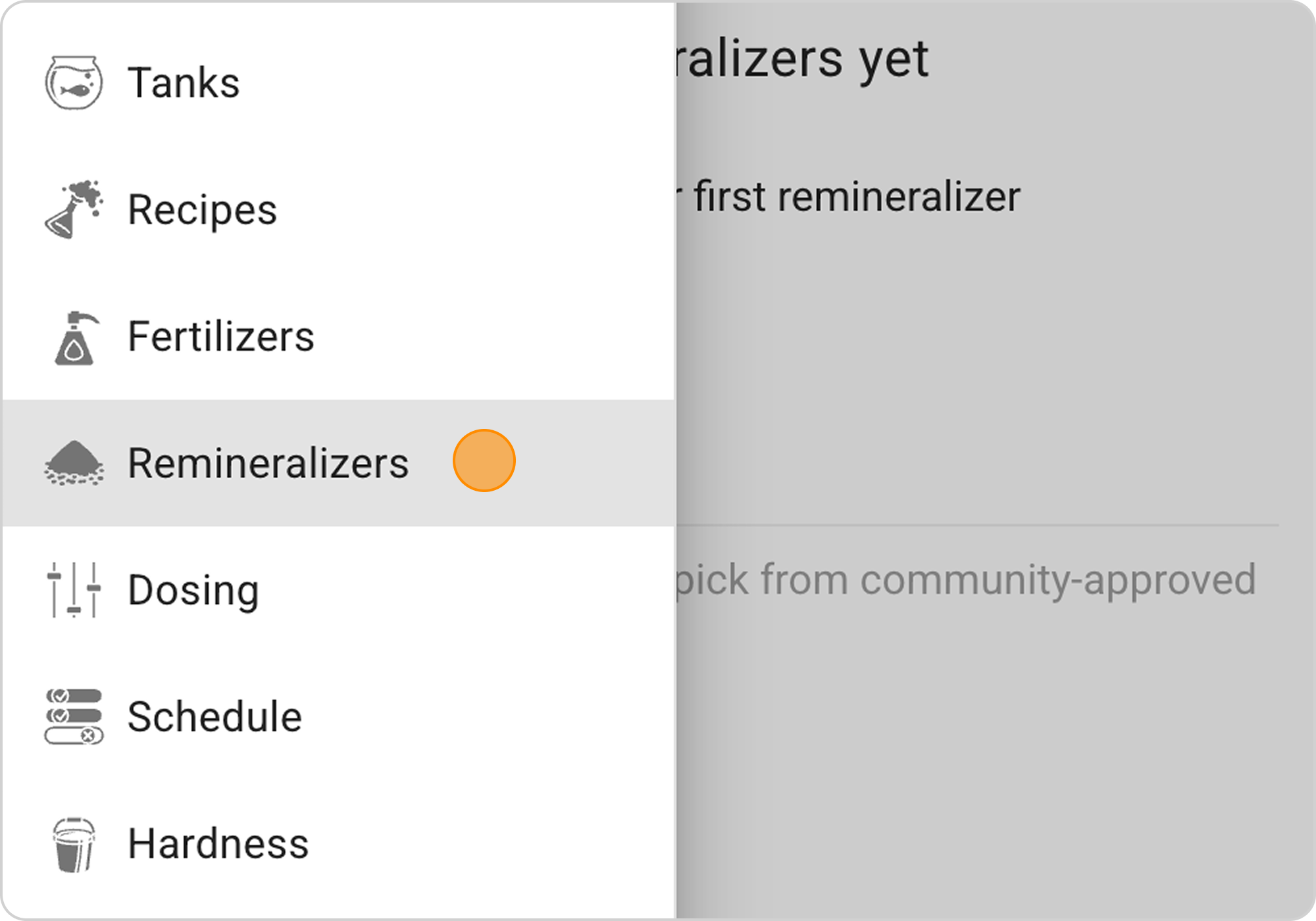
- In the Samomes main menu, select the "Remineralizers" section
- Click the "+ ADD" button in the lower right corner of the screen

Step 2: Select Reagents
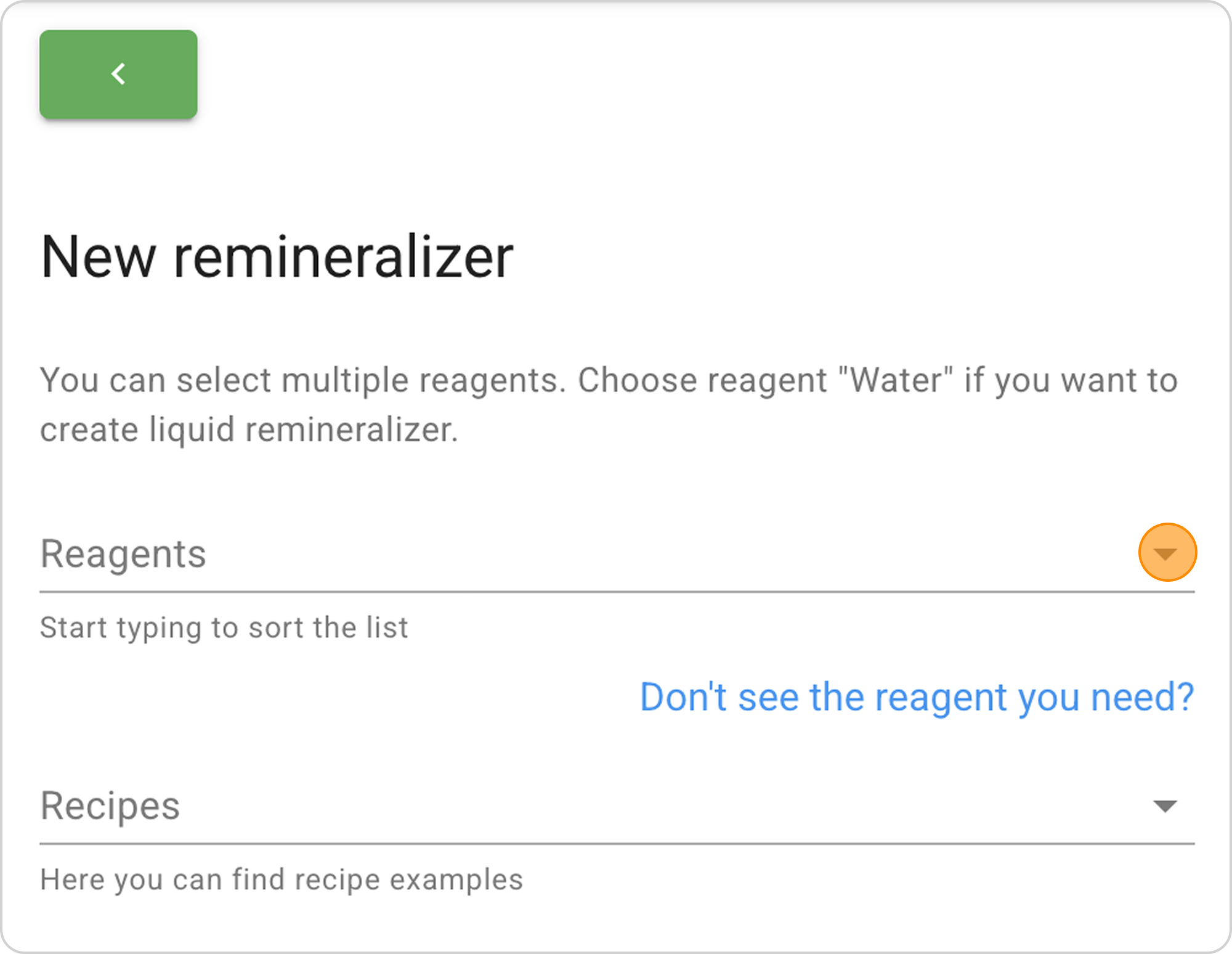
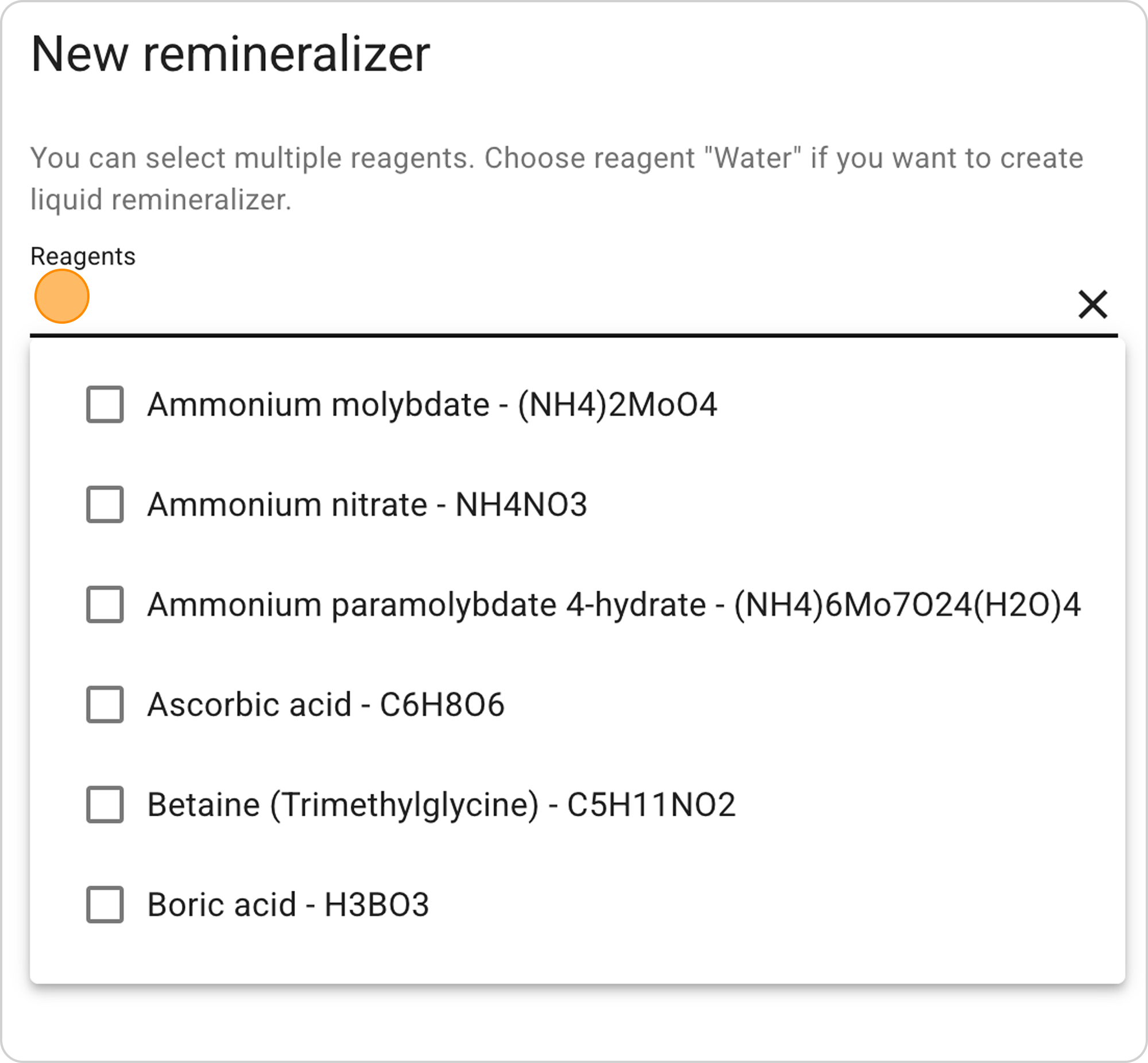
- In the "Reagents" field, select from the dropdown list:
- Calcium sulfate dihydrate (gypsum) - CaSO4(H2O)2
- Magnesium sulfate heptahydrate (Epsom salt) - MgSO4(H2O)7
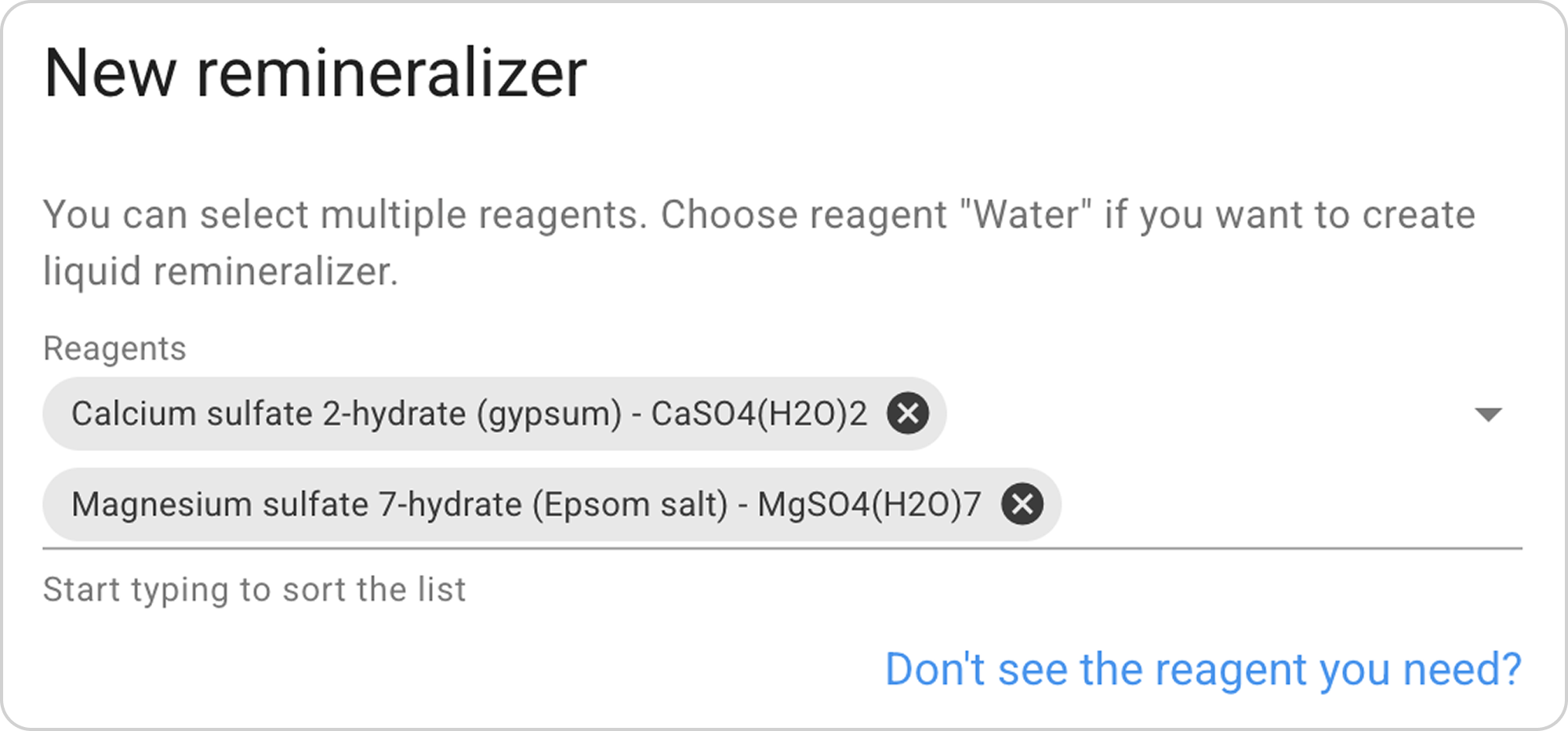
Important: Water (H2O) is not selected automatically, since most remineralizers are made as dry powder.
Step 3: Configure Mixture Parameters
- In the Total Gh field, enter the value "6".
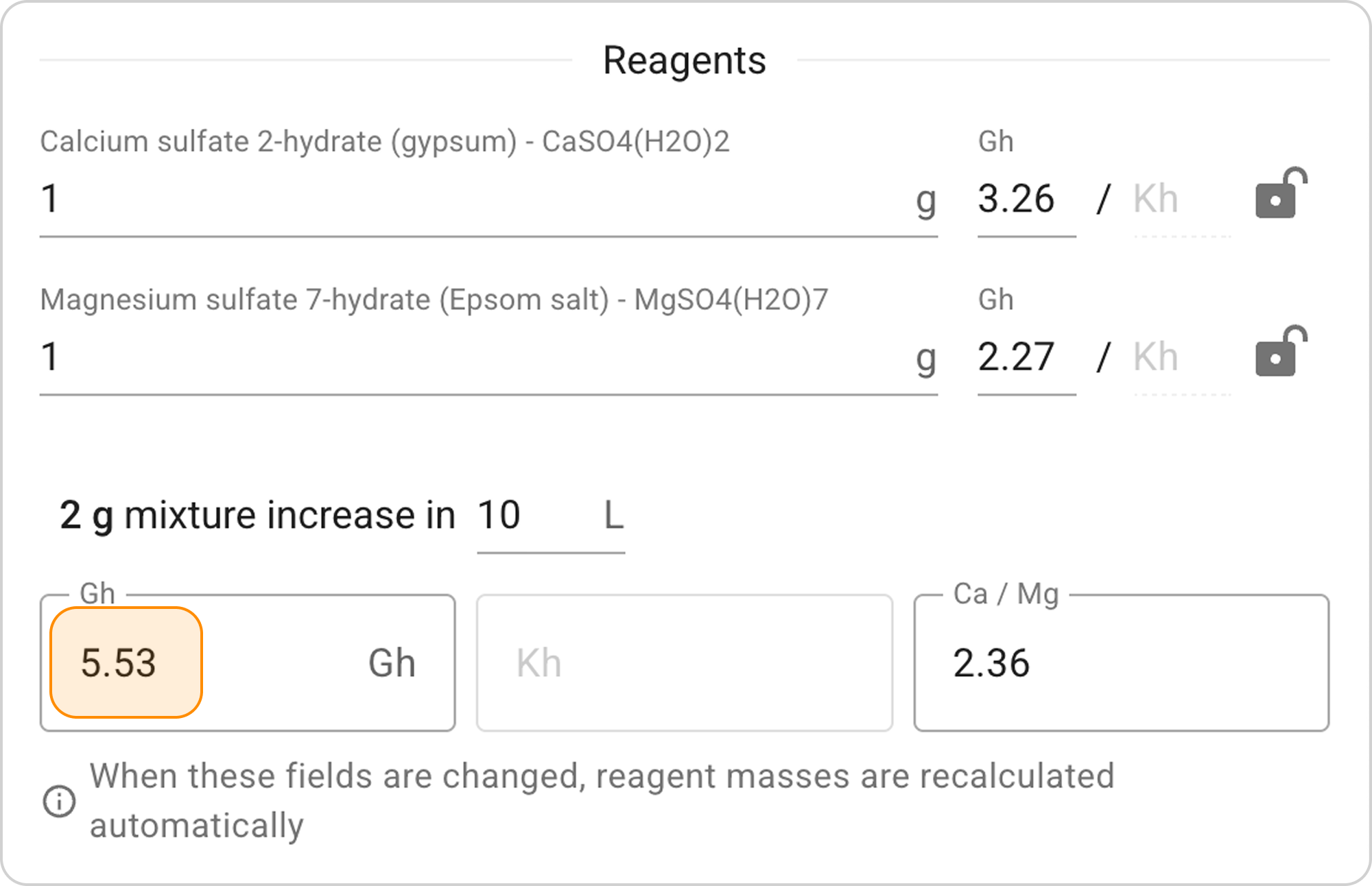
- In the Ca/Mg ratio field, enter the value "3.5".
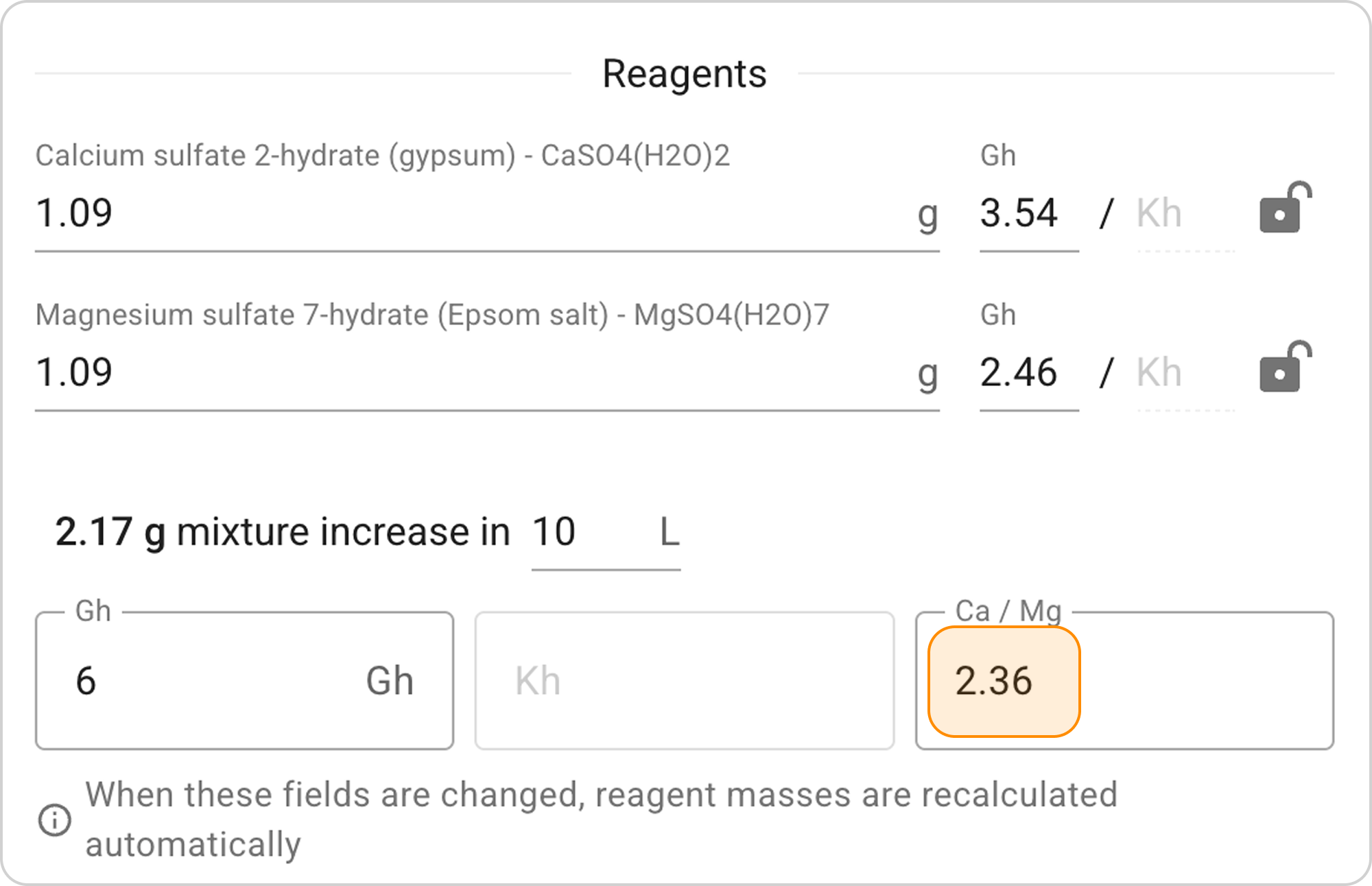
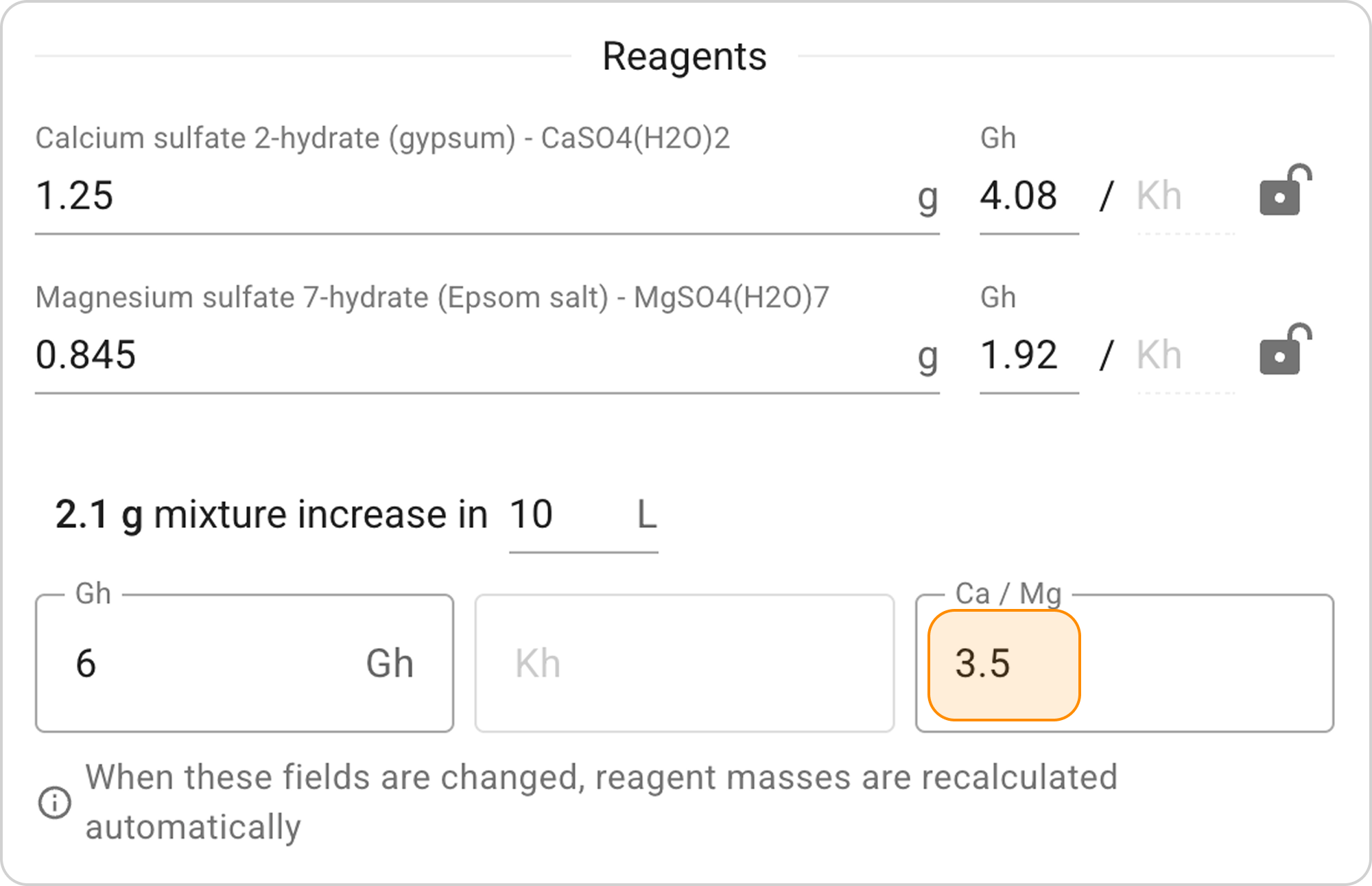
- The system will automatically calculate the required reagent masses:
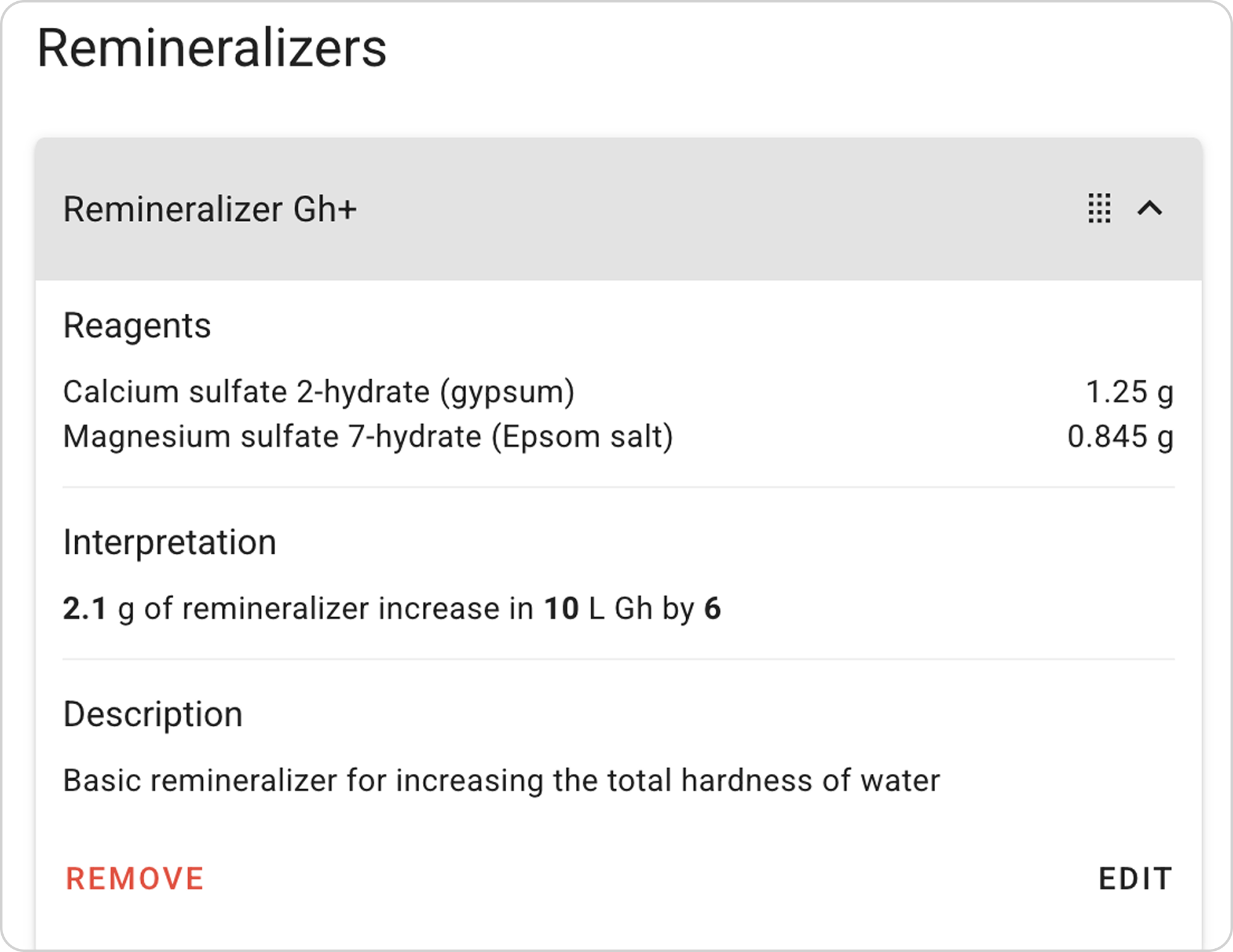
- Gypsum: ~1.25 g
- Epsom salt: ~0.84 g
- Total mixture mass: 2.1 g
Step 4: Study Composition and Characteristics
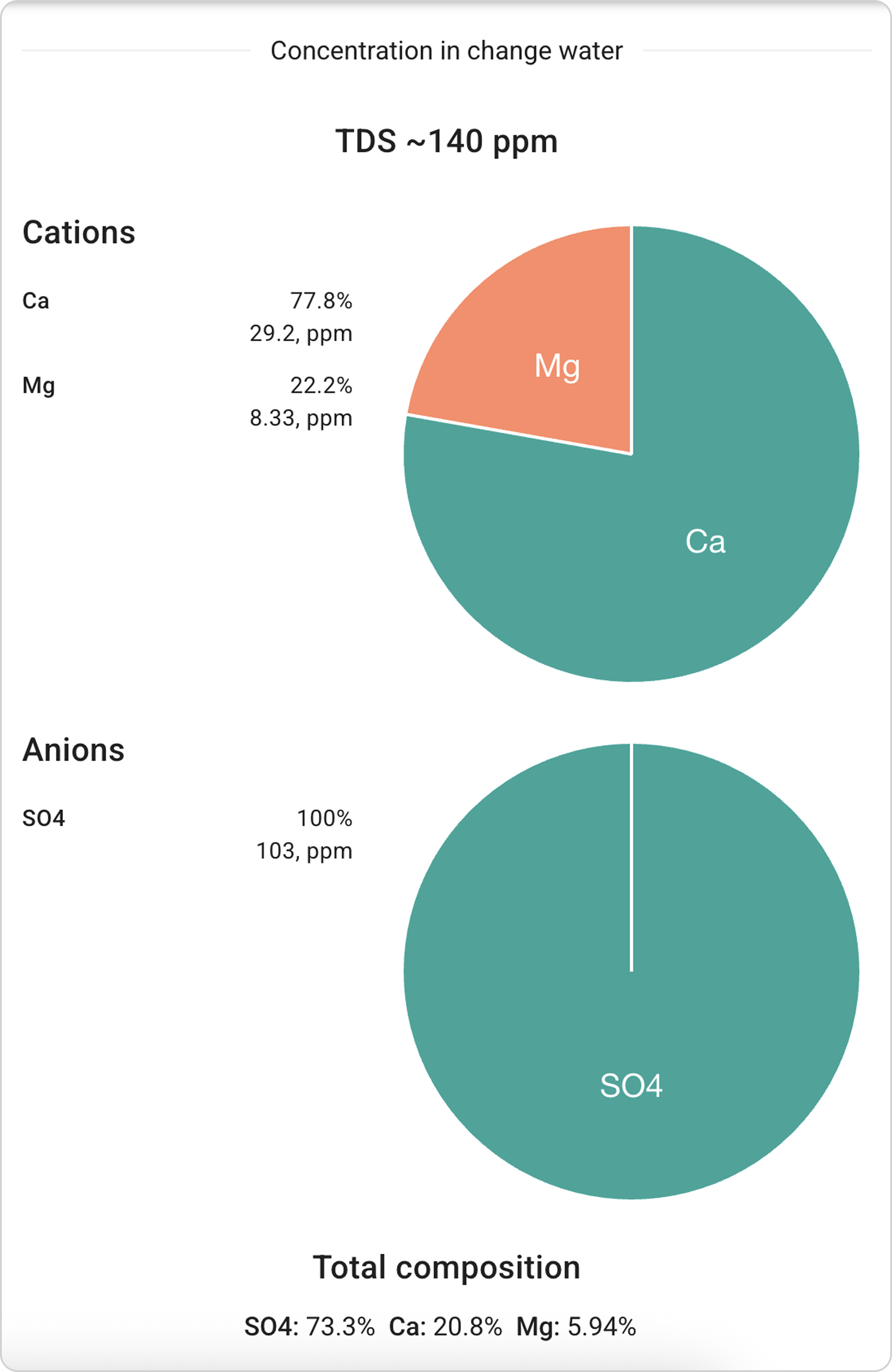
In the "Water change concentration" section you'll see:
- TDS: ~140 ppm
- Cation distribution: Ca 77.8%, Mg 22.2%
- Anions: 100% sulfates (SO4)
Step 5: Use the Portions Table
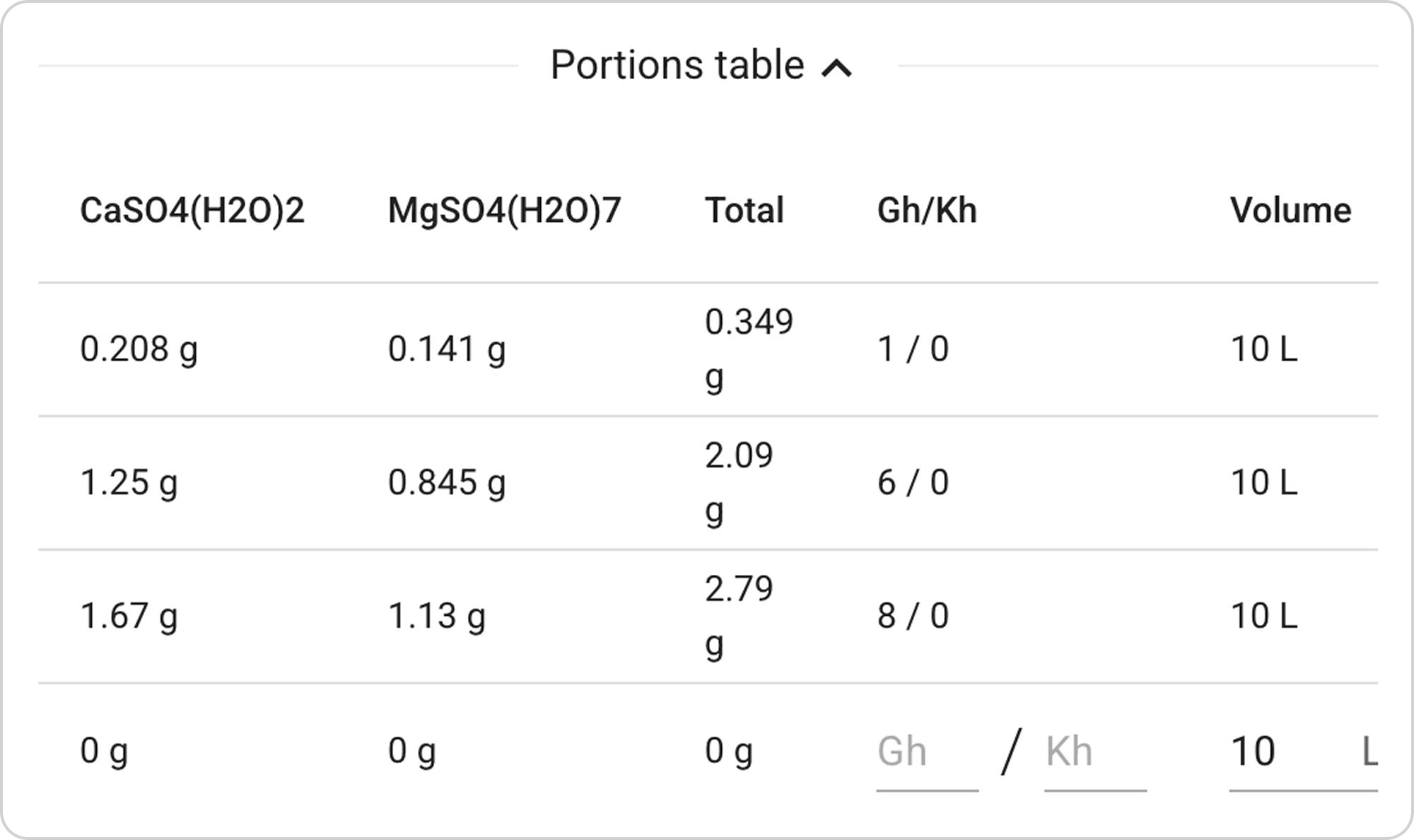
Portions table shows dosages for different water volumes:
- To increase by 1 Gh in 10 L: 0.35 g of mixture
- To increase by 6 Gh in 10 L: 2.1 g of mixture
- For arbitrary parameters: use the bottom row of the table
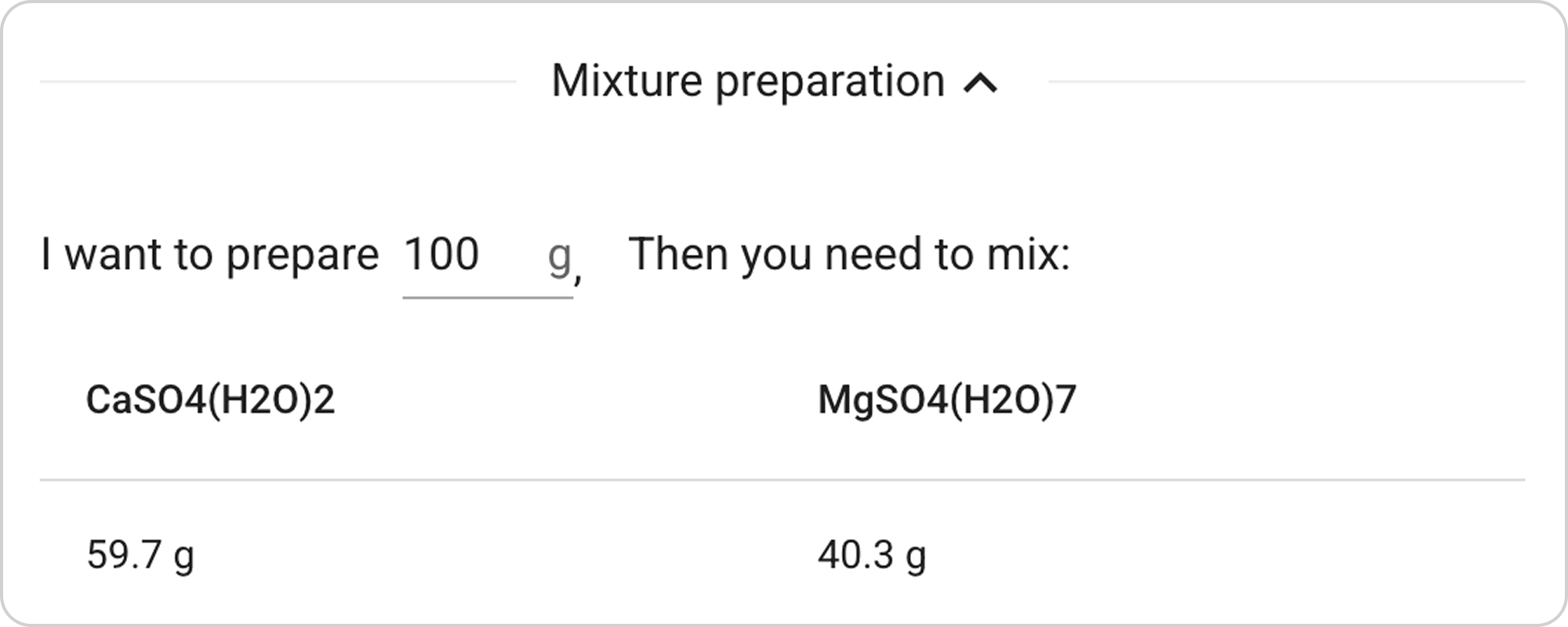
Mixture preparation (if you plan to mix powders):
- For 100 g of finished mixture: 59.8 g gypsum + 40.2 g Epsom salt
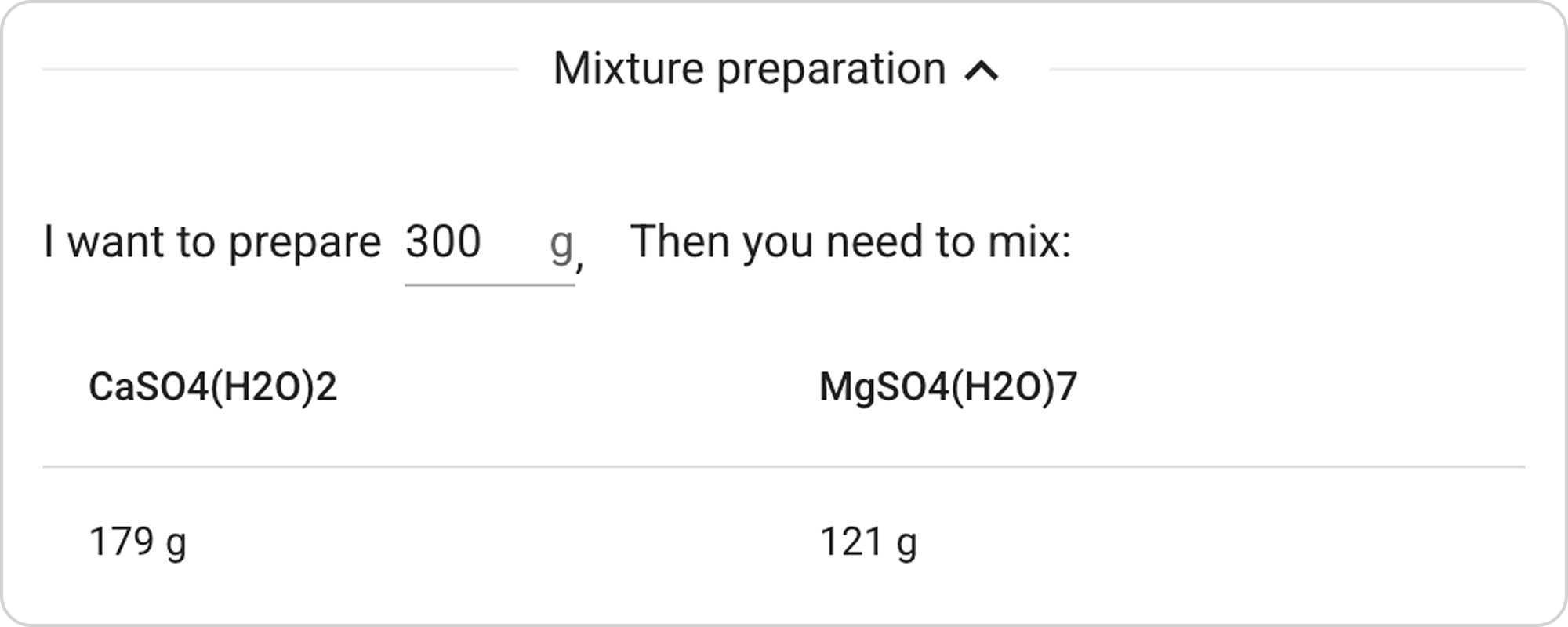
- For 300 g of finished mixture: 179 g gypsum + 121 g Epsom salt
Step 6: Save the Remineralizer
- Enter a name, for example: "DIY Gh+ remineralizer".
- Add a description: "Basic remineralizer to increase water hardness".
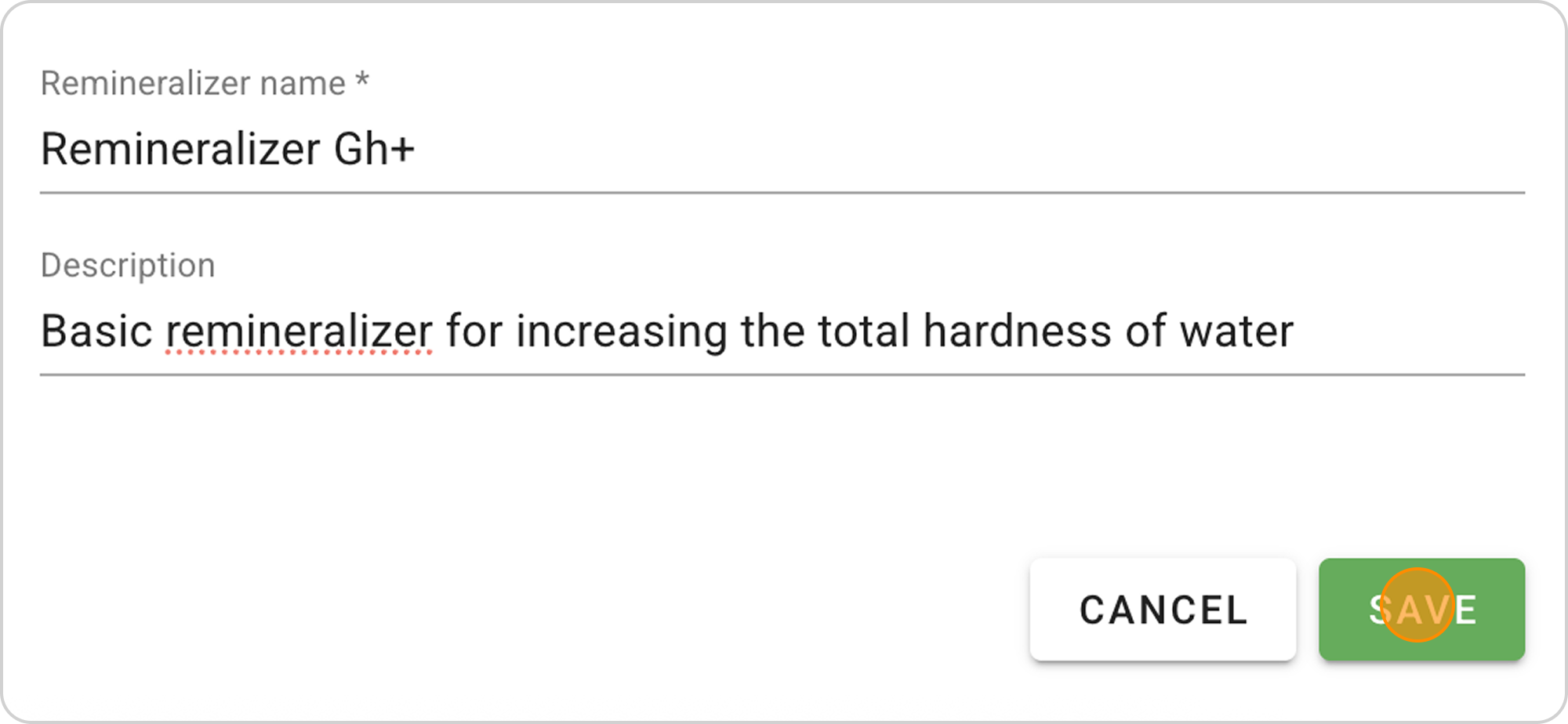
- Click "SAVE".
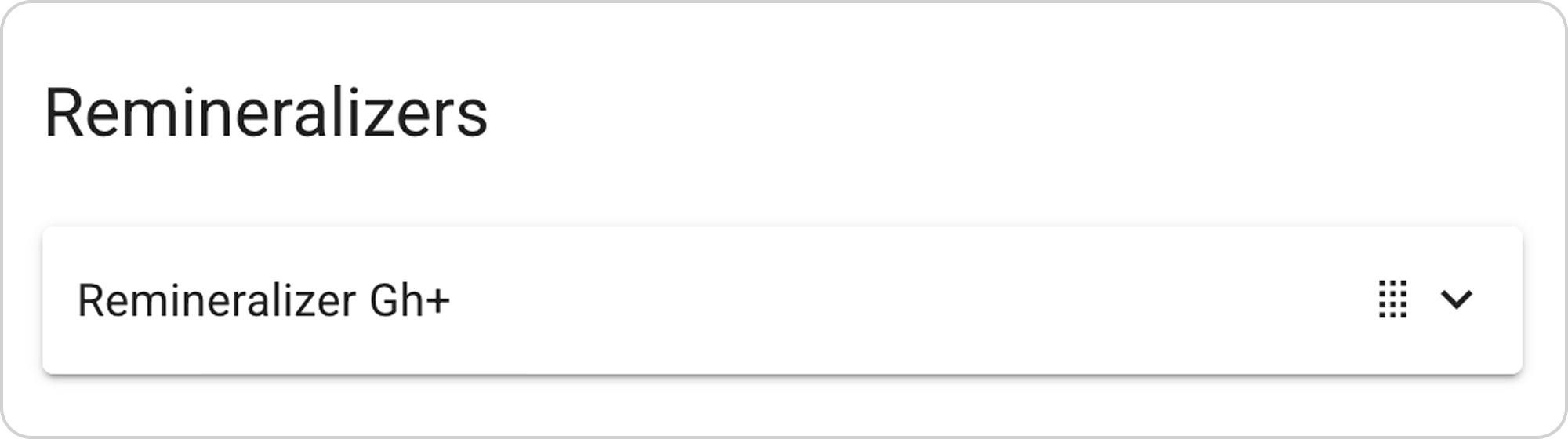
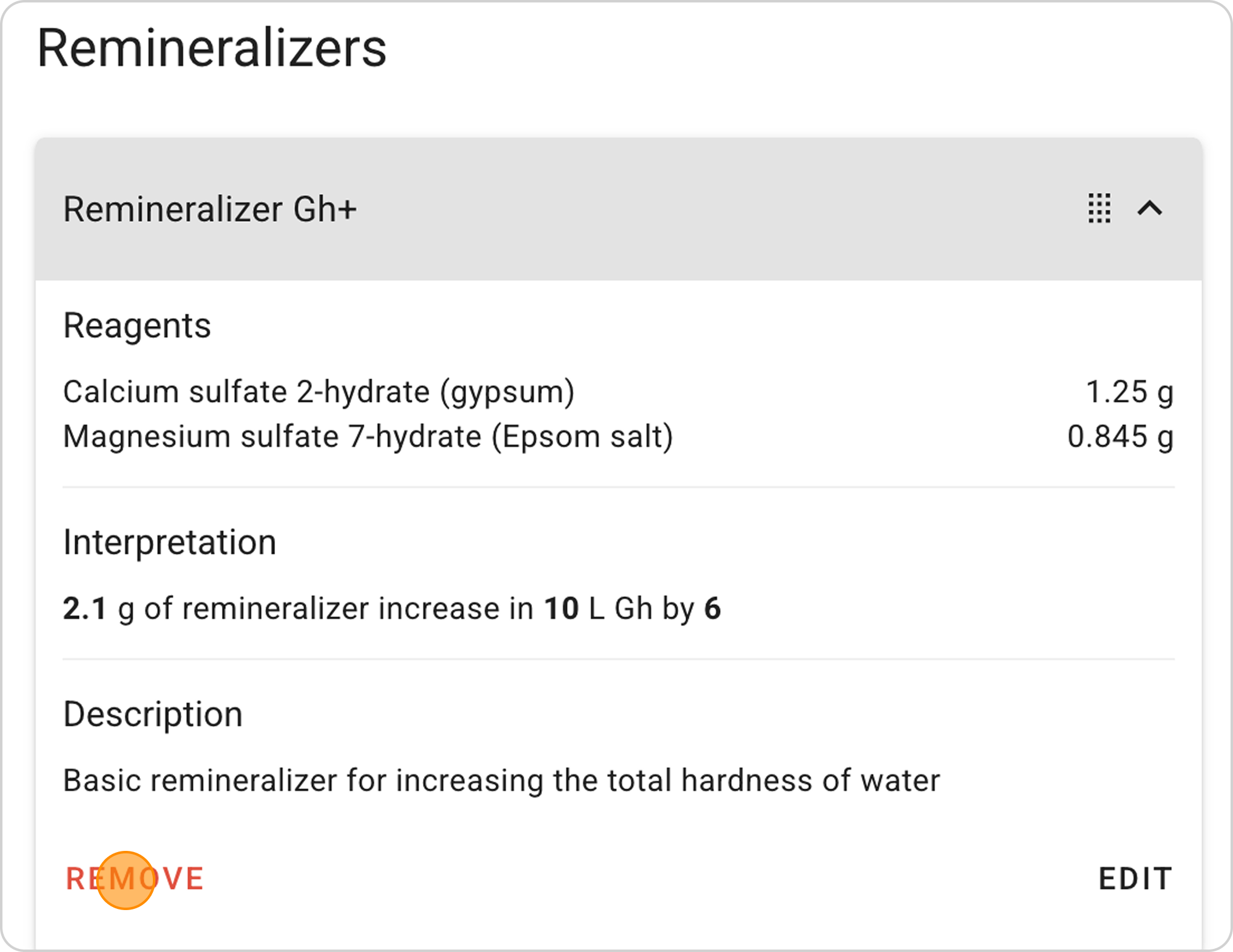
Managing the Saved Recipe
After saving the remineralizer recipe, you can:
View parameters:
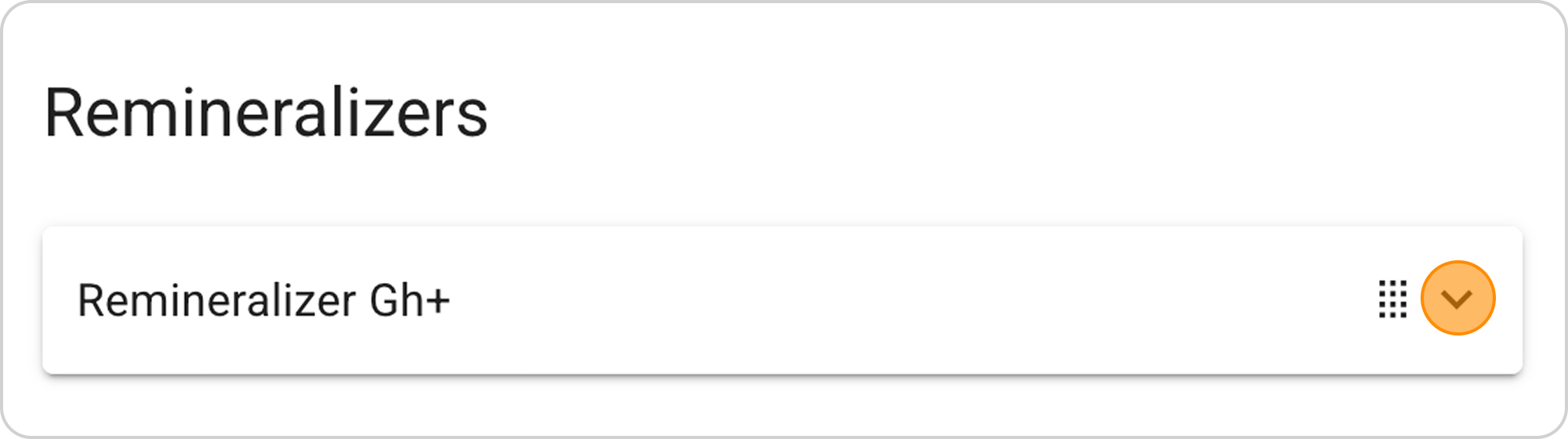
- Click on the arrow to the right of "DIY Gh+ remineralizer"
Change parameters:
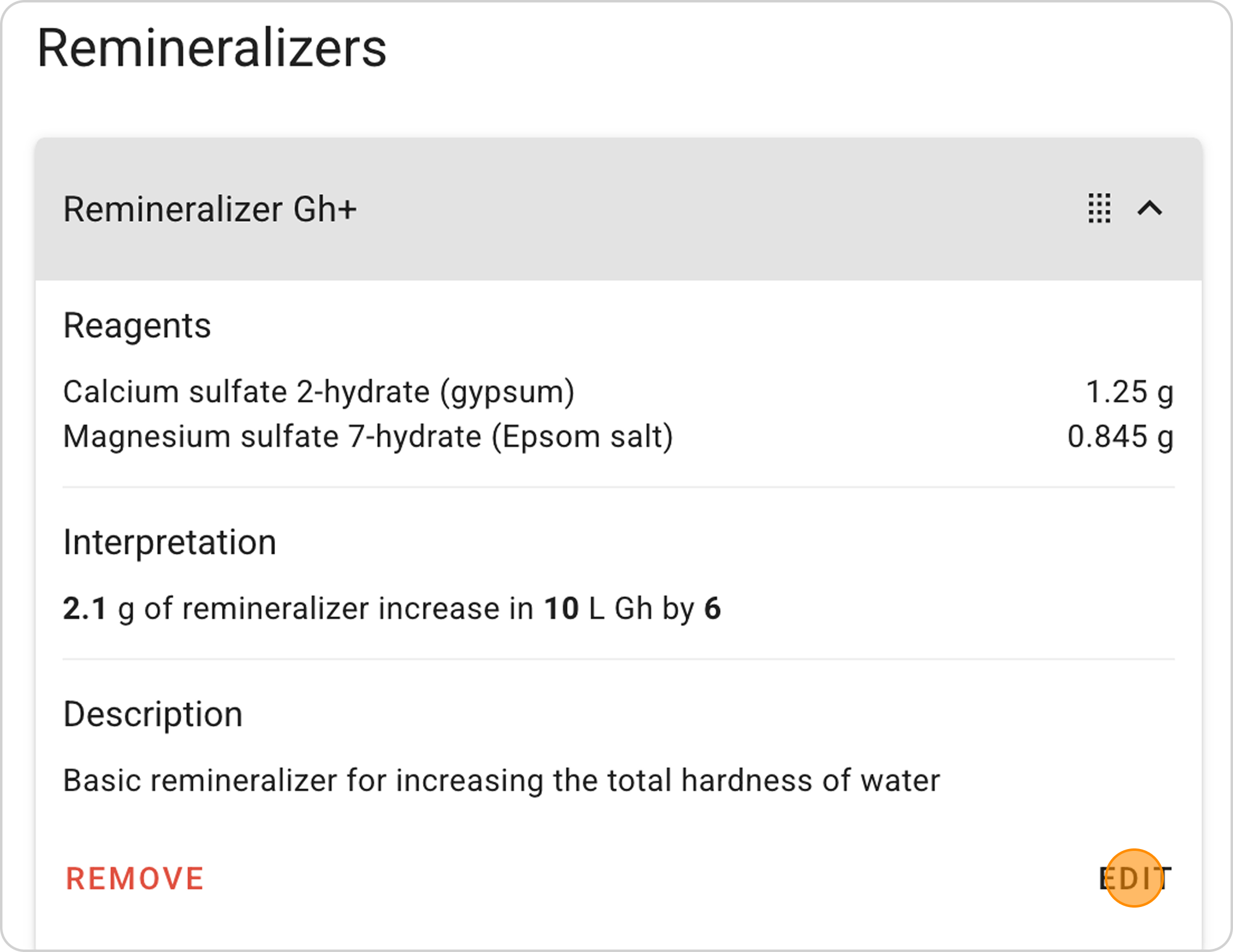
- Click the "EDIT" button in the expanded list
Delete recipe:
- Click the "REMOVE" button in the expanded list
Practical Recommendations
- Mixing: In home conditions it's difficult to evenly mix powders, so separate dosing is often used
- Storage: Store dry reagents in airtight containers
- Control: Periodically check water TDS to control dosing correctness